
The Last Stop of the Night Bus
Chapter bookThe Last Stop of the Night Bus
Joep knows every bus timetable by heart. But Ronnie's night bus stops somewhere that isn't on any map.
Part of the plan. 3 sample books, one per age, are free to read.
Made with AI, checked by people
- 8 chapters
- English
About this book
- Age
- Ages 9–12
- Themes
- Mysteries to solve
- Length
- 8 chapters
- Illustration style
- anime
- Language
- English
In this book
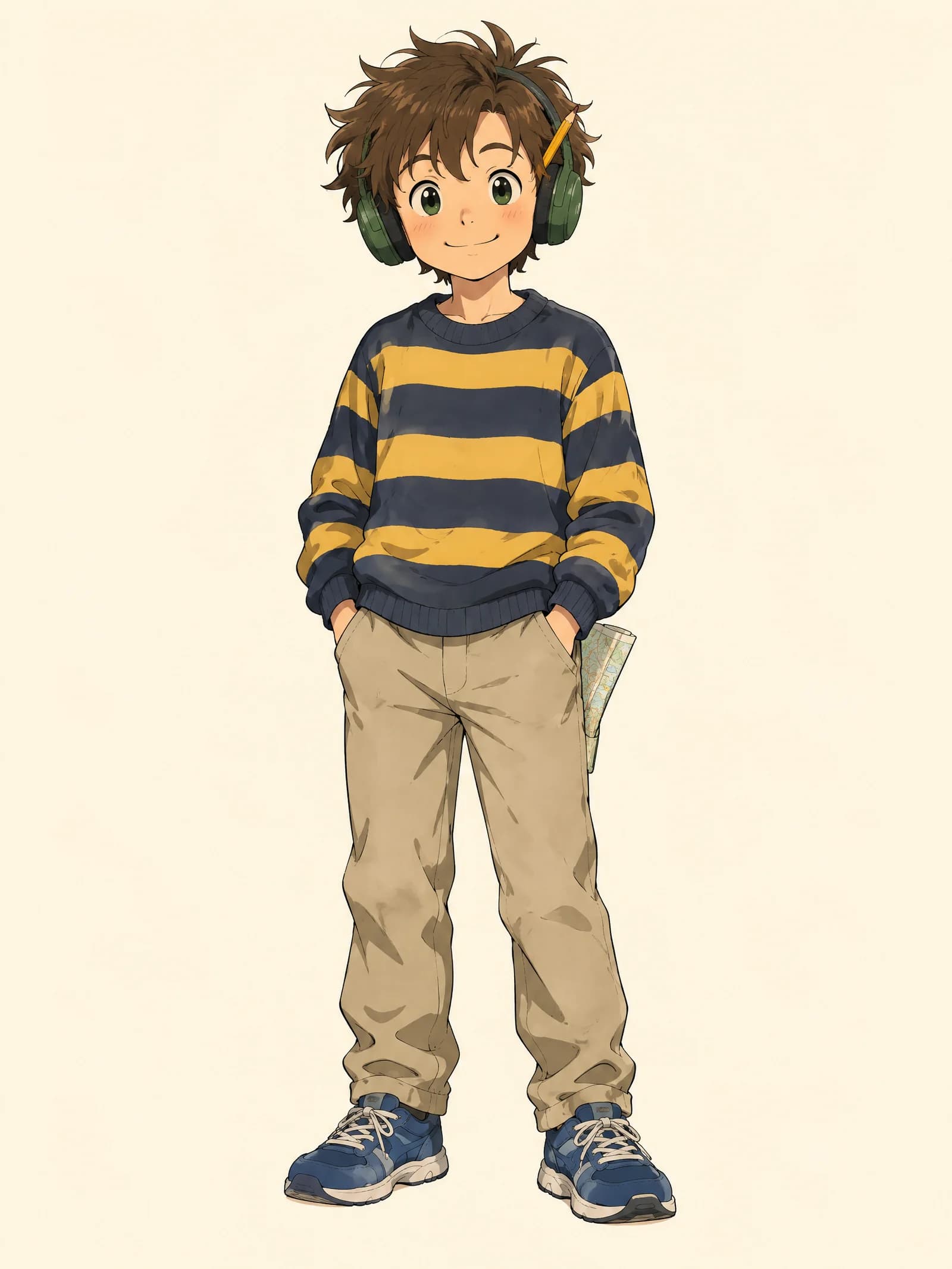 JoepMap and train expert, age 9
 RonnieNight bus driver
Your child becomes the hero of a new story, and they come along. $7.99, read-aloud included, no subscription needed.
Also as a hardcover: order by Monday 30 November. The printed book
This is how the story begins.
Chapter 1
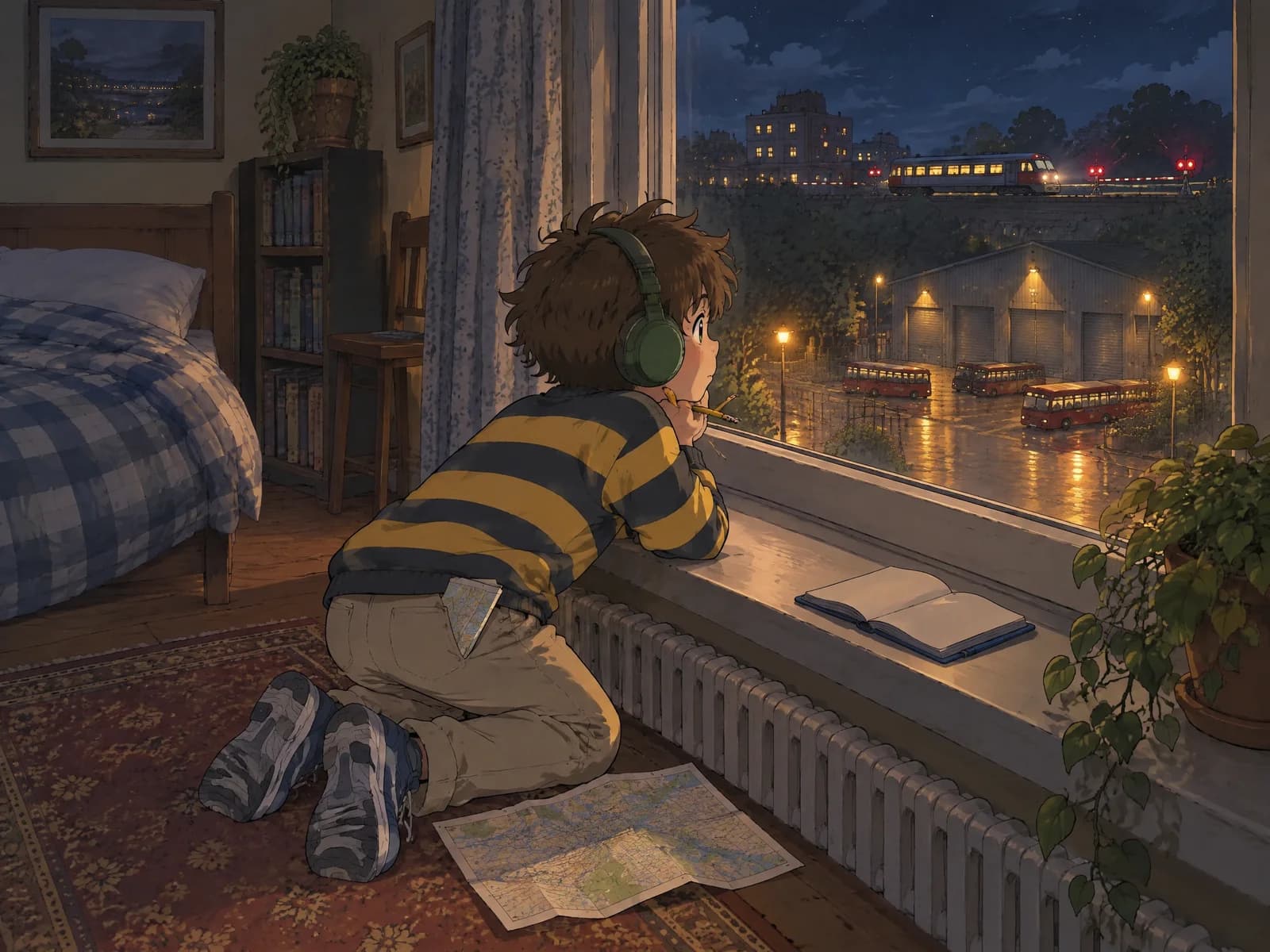
At twenty to three, the watch under Joep's pillow buzzed, three short times. Joep sat straight up in Aunt Hennie's spare bed. He didn't need to get dressed: he had simply kept his blue-and-yellow striped jumper on under the blue checked duvet. His blue trainers stood beside the bed with the laces already loose. One step took him to the tall window, because the spare room was no bigger than that.
He sat down on the worn rug with his knees against the cold windowsill. Three floors below, the street lay empty and shining with the evening's rain. On the other side stood the bus depot, its big roller shutters all pulled down. An owl flew low over the roof with something square tucked under one wing, and vanished behind the streetlamps. Joep watched it go. Owls were not in his timetable.
Much further off, past the rooftops, ran the railway. In the daytime you could hardly see it, but at night Joep knew exactly where to look. By the allotments, where a narrow lane crossed the rails, two red lights hung on a post. For now they were dark.
Through the wall he could hear Aunt Hennie snoring. It was a slow, steady sound, just like a bus waiting at a stop with its engine running. Joep had told her so at supper. "You snore like a bus," he had said. "An old one, with a broken exhaust." Aunt Hennie had laughed, though not very loudly, and afterwards she had stirred her soup for a bit too long. Joep always said what was true. Only once it was out did he sometimes see that it stung a little.
"Lights out at nine, all right?" she had asked, her hand already on the handle of the spare-room door. "Yes," Joep had said, and at nine o'clock the light had gone out. She hadn't asked about anything after that.
His list of stops lay open on the windowsill: an exercise book with a blue cover and one corner curled up. For two years Joep had written every bus stop in the city into it, line after line, in his tiniest handwriting. After every name came a tick, and a tick only went there once he had stood at that stop himself. That was his rule, and he had never once broken it. Now only one line was still empty. It was for the last stop of the N9, the night bus, and you could only get there while the rest of the city was asleep.
At exactly a quarter to three, the two red lights by the allotments began to blink. Joep pressed his nose almost against the glass. Very faintly, through the window, he heard the crossing bell. Ding. Ding. Ding. The barriers came down, red and white, and from so far away they looked smaller than matchsticks. A short train slid past, four carriages with a light at the front, and it was gone. "A quarter to three," Joep whispered happily. "Right on time."
He took the folded map out of his back pocket and opened it on the rug. The paper had been folded so many times that the creases had turned white. Everything was on it, in pencil: every bus route, the bridges, the canal, the railway and even the allotments, drawn as little squares with a dash for every shed. Joep took the pencil from behind his ear and put a dot by the crossing.
He had known it for ages, but he wrote it down anyway, because a thing was only really right once it was on paper. In seven places in the city, the railway met a road. Six times it went over or under, by a bridge or a tunnel. Only here, by the allotments, did a bell have to ring and the barriers have to come down. Only crossing with a bell, he wrote in small letters.
Underneath he wrote something else. After the quarter-to-three train, nothing came for a long time, except at 4.12: the long goods train. It was the only train in that whole hour. Joep knew it from his own timetable, and he had seen it too. In the spring half-term, when he had stayed here before and couldn't sleep, he had counted its wagons. Thirty-one. The window had trembled as it passed. 4.12: goods train, only train, he wrote beside the dot.
Down below, behind the shutters, the N9 was waiting. According to the timetable, the last run left at ten past three from the stop right in front of the depot, and that run went all the way to the end of the line. Joep looked at his watch. It was eight minutes to three. Eighteen minutes.
He laid his finger on the empty line in the exercise book. The paper felt just like all the other lines, smooth and cool. "Tonight," he said quietly to the window. "Tonight you get your tick." He tucked the book under his jumper, folded the map shut and slid the pencil back behind his ear. Joep picked up his trainers and padded in his socks to the door.
Chapter 2
Joep's hand was already on the door handle when something began to rattle down below. He turned and looked out of the tall window. Across the street, one of the depot's big shutters was rolling up, a little way, then a little more, until a stripe of light fell across the wet road. Behind it an orange sign blinked on above a long windscreen. N9, it said. Joep felt his heart give a skip. The bus was already there with all its lights on, ready for the last run.
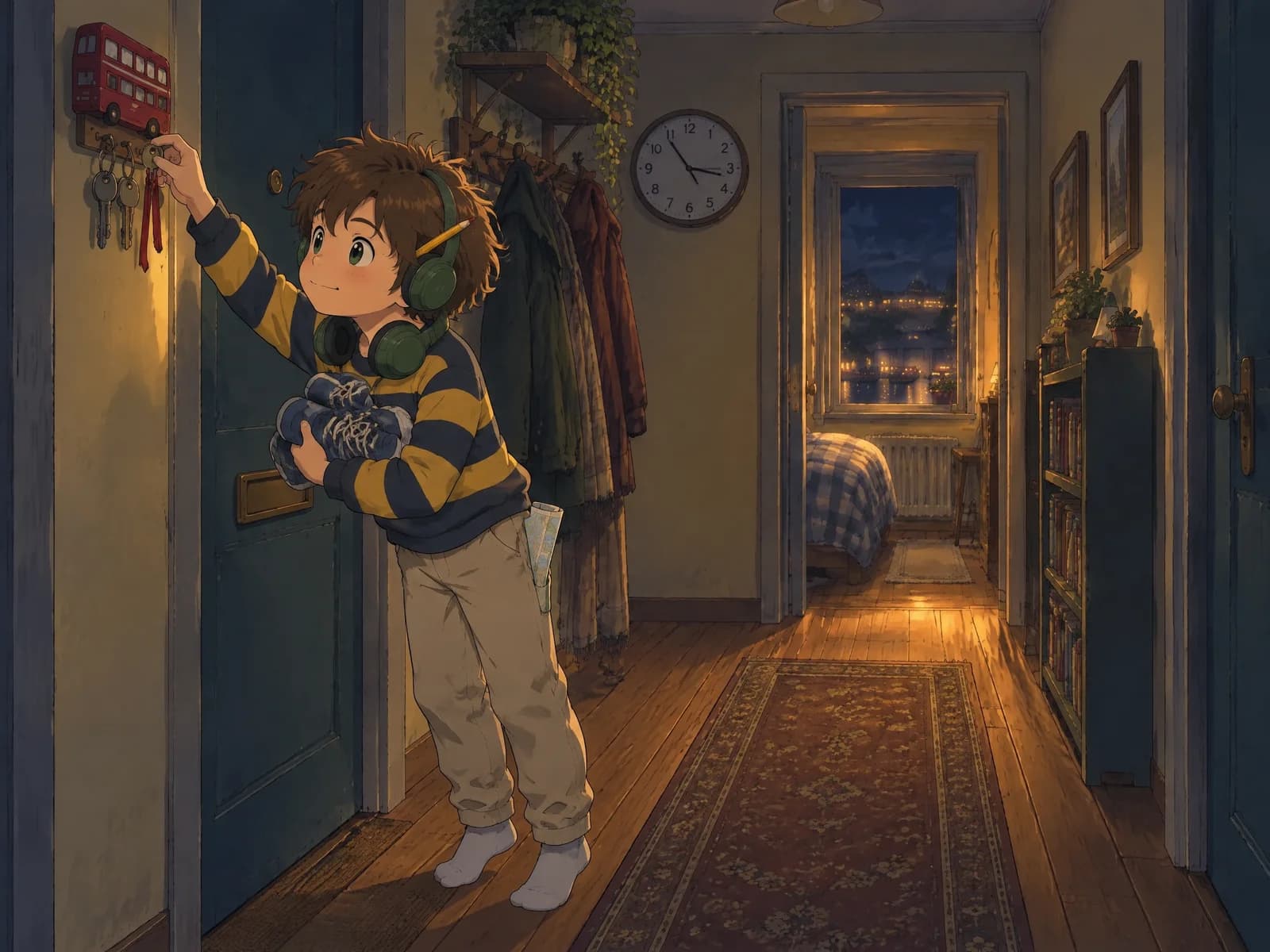
He took his big green headphones from the low bookcase and hung them round his neck. At home he nearly always had them with him, even without music, because with those fat cushions over his ears the whole world became a good deal quieter. He pressed the handle down so slowly that the lock made no sound as it gave, and stepped into the hall.
The hall was narrow, so narrow that Aunt Hennie had to squeeze past the coat rack whenever she fetched her coat. Joep knew it by heart. Last night he had counted it, the way he counted everything: eleven floorboards from the spare room to the front door, and the seventh one squeaked. In his socks he went from board to board, his trainers in one hand and his other hand flat against the pale yellow wall.
At the sixth board he stopped. Right beside him was Aunt Hennie's door, closed, with a thin dark line underneath. Behind it she snored, as slow and steady as before. Joep lifted his foot high and stepped over the squeaky board, one big stride with his arms out wide so he wouldn't wobble.
In the middle of that stride, the snoring stopped. Joep froze, almost on one leg, his trainers clutched to his chest. Behind the door the bed creaked. There was a sigh, and then something that sounded like a word but wasn't one. Joep held his breath and counted in his head, the way he counted the wagons of a train. One. Two. Three. Four. At seven the snoring started again, a bit jerky at first and then as steady as ever. Joep put his foot down and let his breath out very slowly through his nose.
Above the coat rack hung the clock, a round one with numbers so big you could read them from the other end of the hall. In the quiet it ticked louder than it did in the daytime. The long hand pointed at the eleven. Five to three. Fifteen minutes to go, and the stairs went down three whole floors. "Loads of time," Joep whispered, though it didn't feel like loads at all.
Beside the front door hung the key rack: a wooden bus, painted red, with little wheels and windows and a row of brass hooks along the bottom. On the first hook hung Aunt Hennie's own bunch of keys. On the last hung a single key on a red ribbon. Joep knew exactly what it was for. Yesterday afternoon Aunt Hennie had taken the rubbish bag downstairs, and when she came back up, the front door had swung shut behind her. She had stood on the doormat in her dressing gown until Joep let her in. "You have to put that spare key in your pocket when you go down the stairs," she had said, still a little out of breath. "I forgot. That door locks itself when it shuts. And at night you can't get back in downstairs without a key either."
Joep looked at the key, and then over his shoulder at Aunt Hennie's door. He hadn't asked if he could borrow it. But Aunt Hennie had never said he couldn't, and she hadn't asked whether he wanted to go out tonight. That wasn't lying, he decided, but it still felt a bit like the moment she had stirred her soup for too long. "I'm only borrowing it," he whispered to the red bus. "It'll be back before her alarm goes off." He lifted the ribbon off the hook and slid the key into the front pocket of his trousers, where it pressed cool against his leg.
On the doormat he put on his trainers and double-knotted the laces, the way he always did. He turned the knob of the front door. It opened without a squeak, and from the stairwell came a gust of cold air that smelled of wet coats. Joep stepped over the threshold, turned round and held the handle tight. A few centimetres at a time, he let the door close. The last bit he pushed with his shoulder.
Click.
It was only a small sound, but in the silent stairwell it was far too loud. Joep stood with his back against the door, his heart thumping all the way up into his ears. He listened. No bed creaked and no door opened. All he heard, very far off through the wall, was an old bus with a broken exhaust, snoring calmly on. Joep put his hand on the key in his pocket. Through the little window on the landing he saw the N9 roll slowly out of the depot down below, to the stop just in front of the big shutters, across the street.
Read next
The whole library- Ages 9–12Exciting

The Key to the Observatory
Reading bookThe dome won't turn, the comet comes only once in a hundred years, and the one person who knew how to open it has been gone for thirty years.
- Ages 9–12Magical

When the Clocks Ran Backwards
Reading bookMira the witch only wanted to give the village more time for the summer festival. Now every clock is running backwards, the same day keeps starting over, and only Nour has noticed.
- Ages 9–12Funny
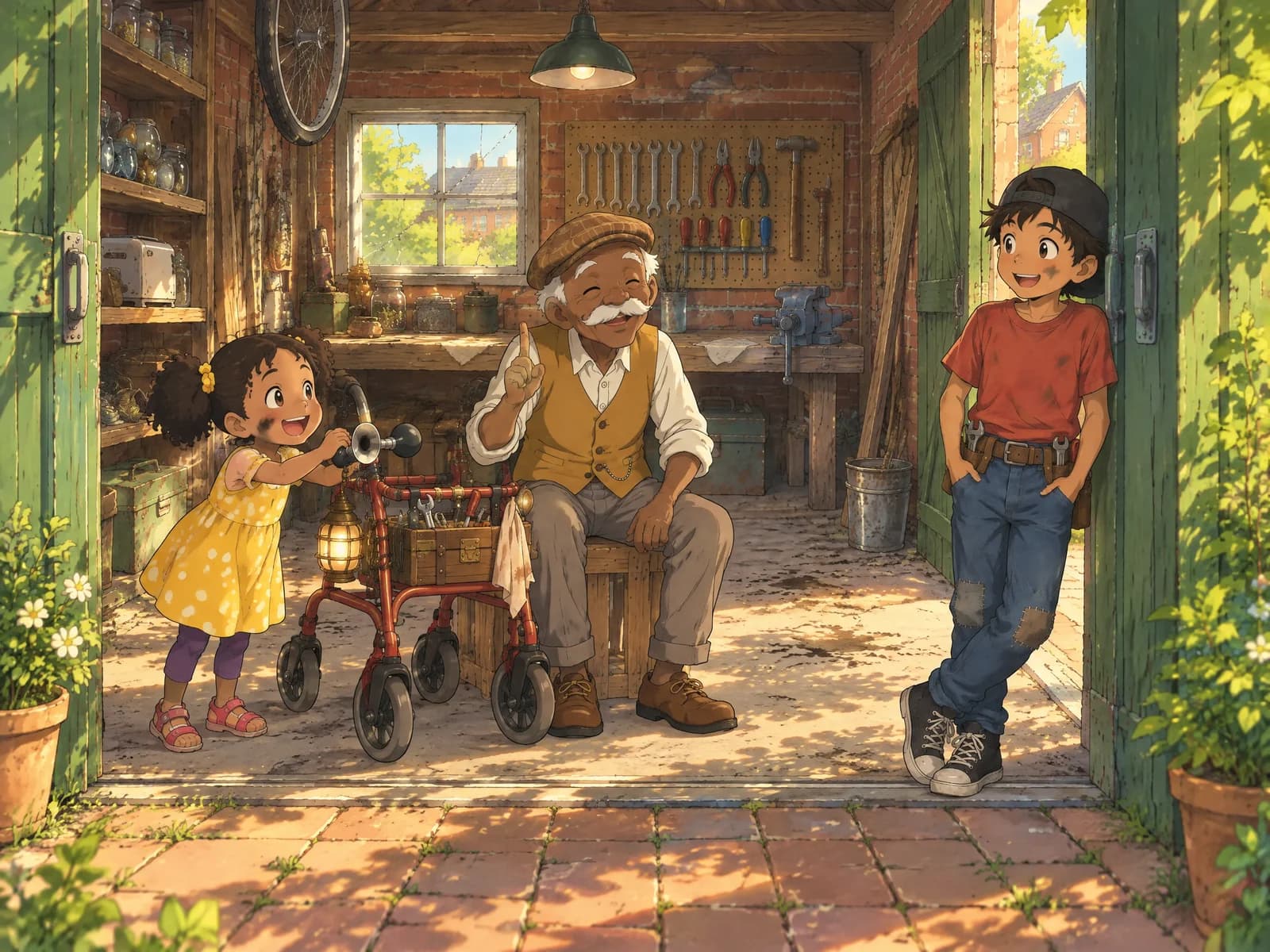
Grandpa Ko's Walker
Chapter bookGrandpa Ko is eighty and rebuilds everything, especially his own walker. For the neighbourhood Inventions Market, he and his young neighbour Ilyas dream up something big.
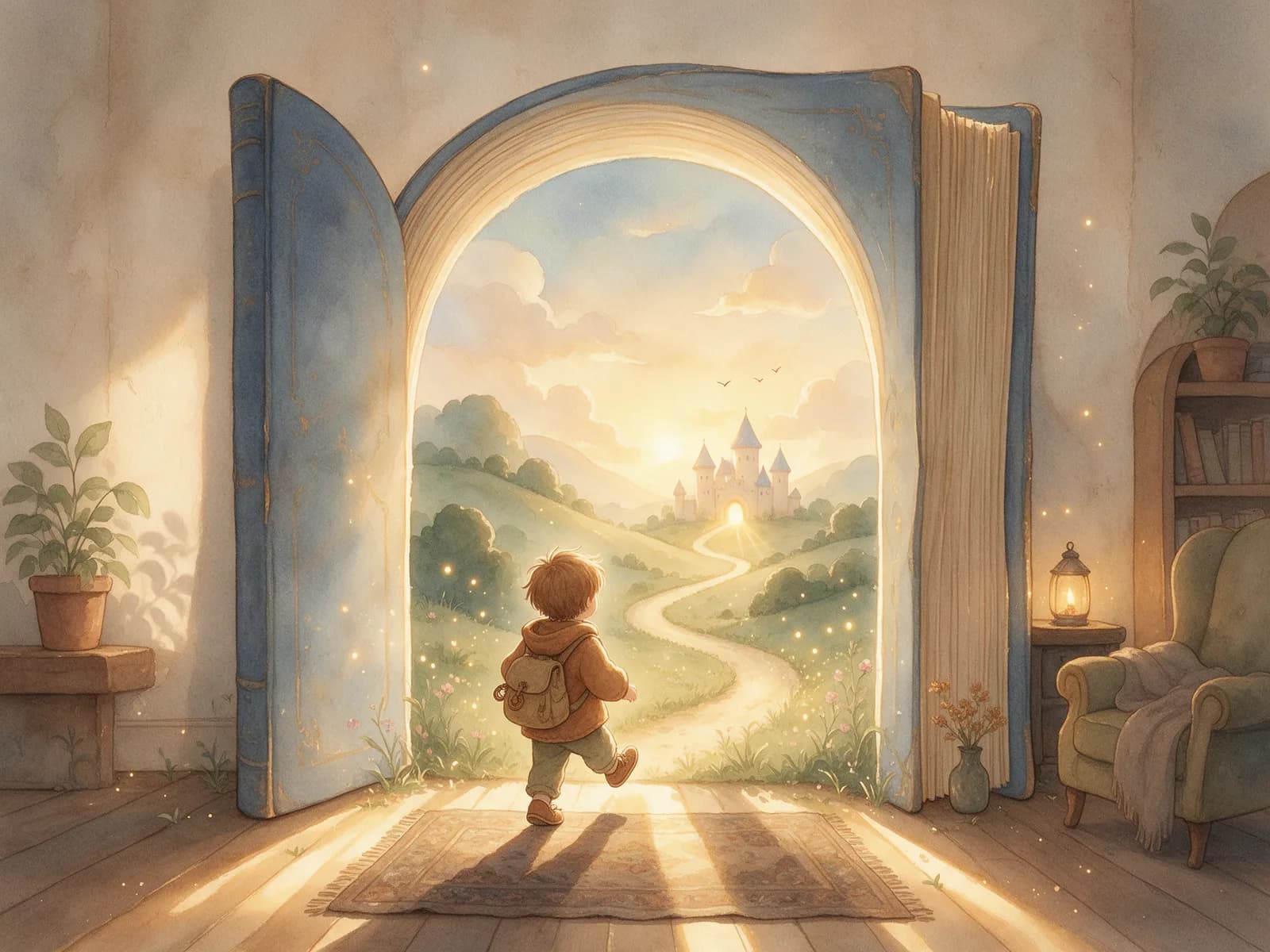
A book starring your child
Personalised bookA one-of-a-kind present: your child drawn into a personalised children's book. $7.99, read-aloud included.
How it works
This book was written and illustrated with AI, and then checked by people.